
Induction stripping is emerging as one of the most efficient and environmentally responsible methods of industrial coating removal, particularly in highly regulated markets like California. In oil and gas facilities such as refineries, storage terminals, tank farms, and pipeline infrastructure, coatings must be periodically removed to meet inspection standards, prevent corrosion, and comply with environmental regulations. Traditional methods such as abrasive blasting and hydrojetting have long been used for this purpose, but they generate significant debris, wastewater, and containment challenges. Induction stripping offers a cleaner, more controlled alternative that aligns with California’s strict air quality and environmental compliance standards.
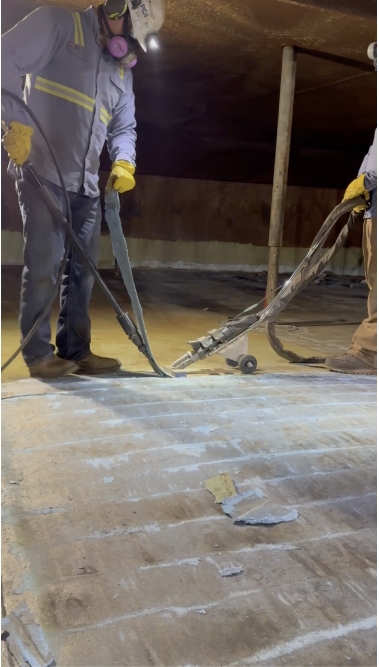
At its core, induction stripping uses electromagnetic energy to rapidly heat the steel substrate beneath a coating. The heat breaks the bond between the coating and the steel, allowing it to be lifted off in large sections. Unlike abrasive blasting, which pulverizes coatings into dust, induction technology removes the coating intact. The result is no secondary waste such as contaminated grit, airborne particulates, or large volumes of slurry. In refineries and fuel terminals where environmental oversight is high and waste disposal costs are significant, reducing secondary waste directly lowers liability, cleanup time, and overall project cost.
Safety is another major advantage, particularly in oil and gas environments where flammable vapors and confined spaces are common. Abrasive blasting introduces sparks, dust clouds, and heavy equipment into sensitive areas. Hydrojetting creates slippery work zones and high-pressure hazards. Induction stripping operates with localized heat, minimal dust, and significantly reduced noise. Because the coating comes off in sheets rather than fragments, workers are exposed to fewer airborne contaminants such as lead or hazardous paint particles. This controlled process improves site safety, simplifies containment requirements, and reduces downtime inside active refinery and terminal operations.
For California’s refineries, pipeline operators, and bulk fuel terminals, the combination of regulatory pressure, environmental sensitivity, and operational uptime demands makes induction stripping a strategic solution. With faster setup, minimal containment, and no secondary waste, induction-based coating removal provides a cleaner and more compliant alternative to abrasive blasting and hydro-jetting. As the industry continues to prioritize sustainability, worker safety, and operational efficiency, induction stripping stands out as a forward-looking technology well suited to the evolving standards of the oil and gas sector in California.